Votre voix.
Votre soutien.
Votre présence compte.
Que vous fassiez un don, partagiez notre message, vous associiez avec nous ou fassiez du bénévolat.
Vous devenez une partie de la reconstruction des vies et de la création d'un nouvel avenir pour le Congo.
Children bear the heaviest burden of the violence in the DRC. Grave human rights violations against minors are occurring at an alarming rate, including targeted abductions and the recruitment of children into armed factions. Young girls are particularly vulnerable, with reported cases of rape and sexual violence surging in conflict zones as sexual violence is frequently used as a weapon of war. These immediate physical threats strip children of their safety, innocence, and fundamental human rights
The DRC is enduring one of the most complex and protracted humanitarian crises in the world, primarily driven by decades of armed conflict in its eastern provinces, such as North Kivu, South Kivu, and Ituri. By recent estimates, the country is home to over 7.1 million internally displaced persons (IDPs)—the largest displaced population in Africa and one of the largest globally. Constant clashes between the Congolese armed forces and various rebel groups have forced millions to flee their communities, uprooting their lives and leaving them entirely dependent on humanitarian aid for survival
The conflict has decimated local healthcare infrastructure, with dozens of clinics and hospitals destroyed or looted of essential medical supplies. This lack of primary care, combined with dense populations in displacement camps, has made the DRC the epicenter for severe disease outbreaks, including devastating waves of cholera, measles, and mpox. Additionally, acute food insecurity ravages the region; millions of children, along with pregnant and breastfeeding women, suffer from acute malnutrition, severely compromising their immune systems and long-term health
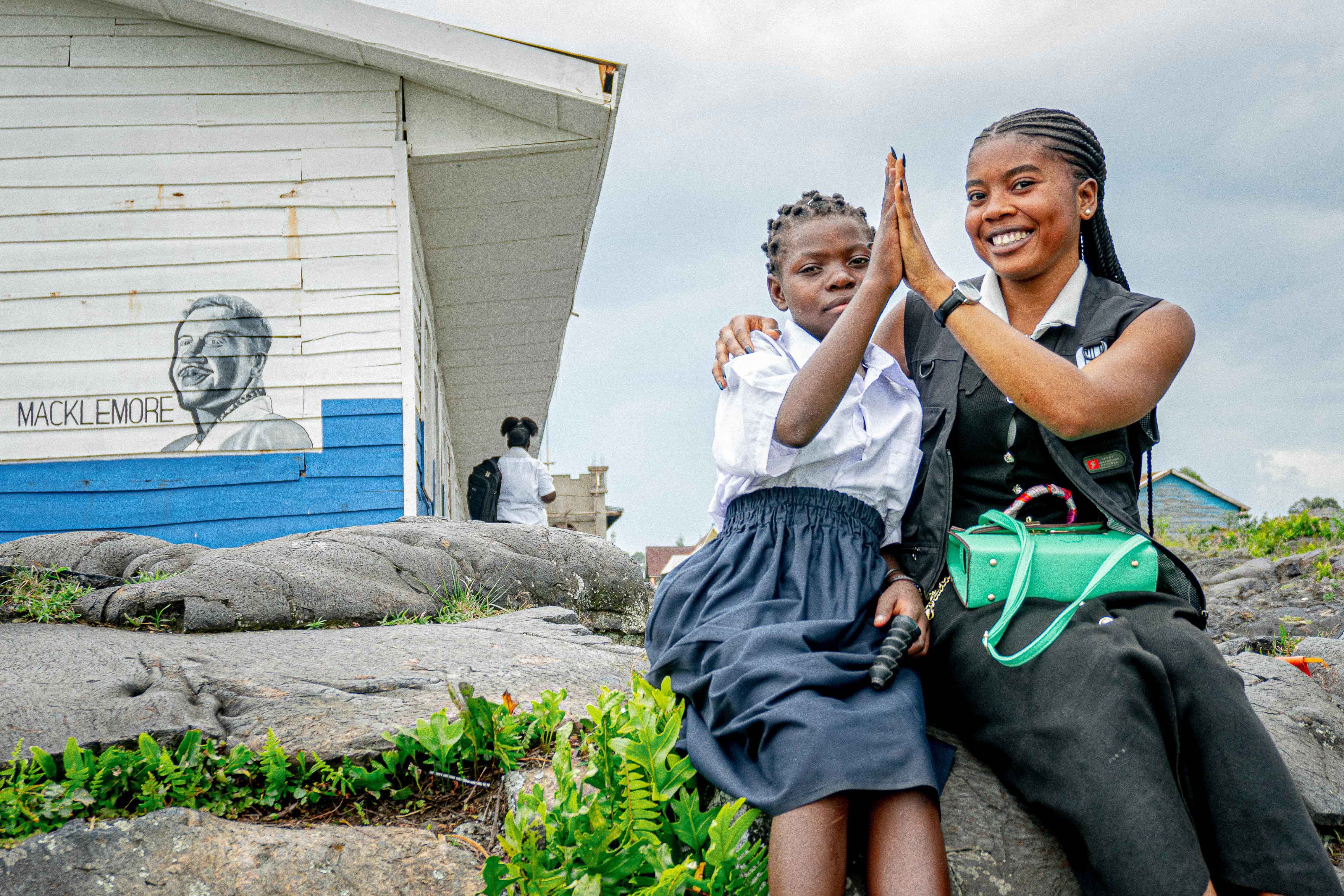
The ongoing violence has catastrophically disrupted education across the eastern DRC. Thousands of schools have been forced to close because they have been directly attacked, looted, or occupied by armed groups. Furthermore, many intact schools are currently being used as emergency shelters for displaced families. In the Kivu provinces alone, these disruptions have left an estimated 2 million children without access to formal education, threatening an entire generation's future and halting their cognitive and social development.
When villages are attacked, the ensuing panic frequently causes families to become separated as they flee in different directions. The chaos of displacement fractures family units, leaving many children unaccompanied and highly vulnerable to exploitation. Furthermore, the crisis is compounded by staggering economic hardship. With roughly 74% of the country's population living in extreme poverty on less than $2.15 a day, parents face insurmountable hurdles in providing basic necessities, food, and safety for their children.
Travaillons ensemble
(CQ® — 07)
©2025
Contactez maintenant
Contactez-nous !
Rejoignez notre communauté !
Votre voix.
Votre soutien.
Votre présence compte.
Que vous fassiez un don, partagiez notre message, vous associiez avec nous ou fassiez du bénévolat.
Vous devenez une partie de la reconstruction des vies et de la création d'un nouvel avenir pour le Congo.
Children bear the heaviest burden of the violence in the DRC. Grave human rights violations against minors are occurring at an alarming rate, including targeted abductions and the recruitment of children into armed factions. Young girls are particularly vulnerable, with reported cases of rape and sexual violence surging in conflict zones as sexual violence is frequently used as a weapon of war. These immediate physical threats strip children of their safety, innocence, and fundamental human rights
The DRC is enduring one of the most complex and protracted humanitarian crises in the world, primarily driven by decades of armed conflict in its eastern provinces, such as North Kivu, South Kivu, and Ituri. By recent estimates, the country is home to over 7.1 million internally displaced persons (IDPs)—the largest displaced population in Africa and one of the largest globally. Constant clashes between the Congolese armed forces and various rebel groups have forced millions to flee their communities, uprooting their lives and leaving them entirely dependent on humanitarian aid for survival
The conflict has decimated local healthcare infrastructure, with dozens of clinics and hospitals destroyed or looted of essential medical supplies. This lack of primary care, combined with dense populations in displacement camps, has made the DRC the epicenter for severe disease outbreaks, including devastating waves of cholera, measles, and mpox. Additionally, acute food insecurity ravages the region; millions of children, along with pregnant and breastfeeding women, suffer from acute malnutrition, severely compromising their immune systems and long-term health
The ongoing violence has catastrophically disrupted education across the eastern DRC. Thousands of schools have been forced to close because they have been directly attacked, looted, or occupied by armed groups. Furthermore, many intact schools are currently being used as emergency shelters for displaced families. In the Kivu provinces alone, these disruptions have left an estimated 2 million children without access to formal education, threatening an entire generation's future and halting their cognitive and social development.
When villages are attacked, the ensuing panic frequently causes families to become separated as they flee in different directions. The chaos of displacement fractures family units, leaving many children unaccompanied and highly vulnerable to exploitation. Furthermore, the crisis is compounded by staggering economic hardship. With roughly 74% of the country's population living in extreme poverty on less than $2.15 a day, parents face insurmountable hurdles in providing basic necessities, food, and safety for their children.
Travaillons ensemble
©2025
Contactez maintenant
Contactez-nous !
Rejoignez notre communauté !
Votre voix.
Votre soutien.
Votre présence compte.
Que vous fassiez un don, partagiez notre message, vous associiez avec nous ou fassiez du bénévolat.
Vous devenez une partie de la reconstruction des vies et de la création d'un nouvel avenir pour le Congo.
Children bear the heaviest burden of the violence in the DRC. Grave human rights violations against minors are occurring at an alarming rate, including targeted abductions and the recruitment of children into armed factions. Young girls are particularly vulnerable, with reported cases of rape and sexual violence surging in conflict zones as sexual violence is frequently used as a weapon of war. These immediate physical threats strip children of their safety, innocence, and fundamental human rights
The DRC is enduring one of the most complex and protracted humanitarian crises in the world, primarily driven by decades of armed conflict in its eastern provinces, such as North Kivu, South Kivu, and Ituri. By recent estimates, the country is home to over 7.1 million internally displaced persons (IDPs)—the largest displaced population in Africa and one of the largest globally. Constant clashes between the Congolese armed forces and various rebel groups have forced millions to flee their communities, uprooting their lives and leaving them entirely dependent on humanitarian aid for survival
The conflict has decimated local healthcare infrastructure, with dozens of clinics and hospitals destroyed or looted of essential medical supplies. This lack of primary care, combined with dense populations in displacement camps, has made the DRC the epicenter for severe disease outbreaks, including devastating waves of cholera, measles, and mpox. Additionally, acute food insecurity ravages the region; millions of children, along with pregnant and breastfeeding women, suffer from acute malnutrition, severely compromising their immune systems and long-term health
The ongoing violence has catastrophically disrupted education across the eastern DRC. Thousands of schools have been forced to close because they have been directly attacked, looted, or occupied by armed groups. Furthermore, many intact schools are currently being used as emergency shelters for displaced families. In the Kivu provinces alone, these disruptions have left an estimated 2 million children without access to formal education, threatening an entire generation's future and halting their cognitive and social development.
When villages are attacked, the ensuing panic frequently causes families to become separated as they flee in different directions. The chaos of displacement fractures family units, leaving many children unaccompanied and highly vulnerable to exploitation. Furthermore, the crisis is compounded by staggering economic hardship. With roughly 74% of the country's population living in extreme poverty on less than $2.15 a day, parents face insurmountable hurdles in providing basic necessities, food, and safety for their children.
Travaillons ensemble
(CQ® — 07)
©2025
Contactez maintenant
Contactez-nous !
Rejoignez notre communauté !
Voir les dernières actualités et mises à jour
Get in touch
View Current Progress
Get in touch